Blog
Vestibular Therapy for Vertigo: How PT Restores Balance
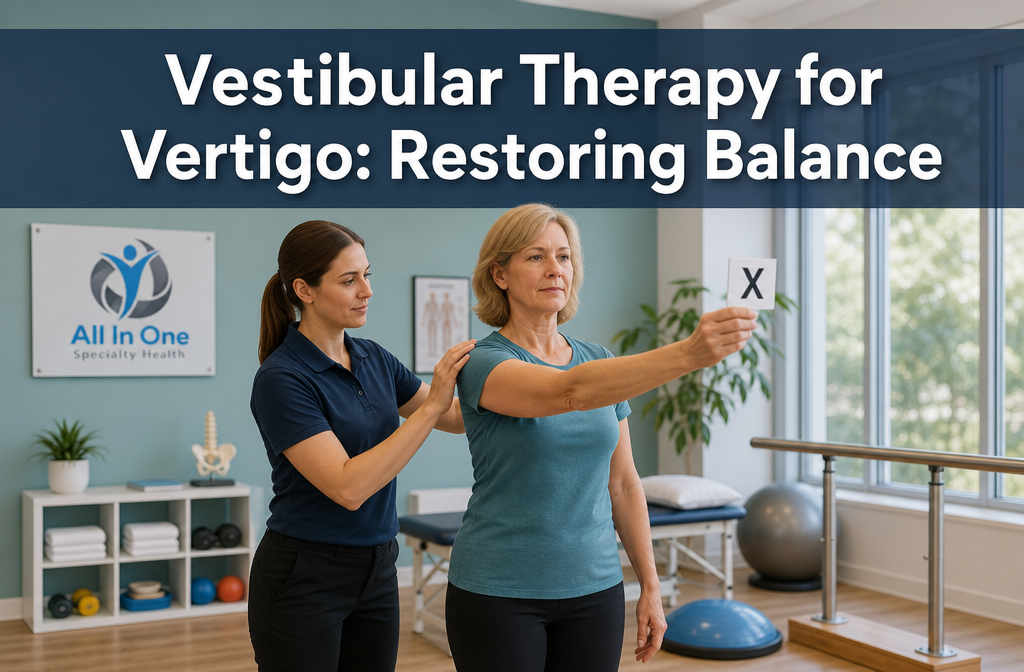
Vestibular therapy for vertigo is a specialized form of physical therapy that retrains the brain, eyes, and inner ear to work together so the world stops spinning.
June 2, 2026
Clinically reviewed by Patricia Freire, PT (Florida license PT13065), All In One Specialty Health, Miami Gardens. Medical disclaimer
Last updated: June 3, 2026
Quick Answer
Vestibular therapy for vertigo is a specialized form of physical therapy that retrains the brain, eyes, and inner ear to work together so the world stops spinning. Most patients in Miami Gardens, Miami Lakes, and Hialeah notice meaningful improvement within 4 to 8 weeks of guided sessions, especially for common causes like BPPV, vestibular neuritis, and post-concussion dizziness. It is non-invasive, evidence-based, and tailored to your specific triggers.
Key Takeaways
- Vestibular therapy uses targeted exercises (gaze stabilization, habituation, balance retraining, and canalith repositioning) to reduce dizziness and improve balance.
- BPPV, the most common cause of vertigo, often resolves in 1 to 3 sessions using the Epley or Semont maneuver.
- Cash-pay sessions typically range from about $75 to $200 per visit in South Florida; many insurance plans, Medicare, PIP, and workers' comp cover treatment.
- Florida has direct access, so you usually do not need a referral to start an evaluation.
- Home exercises help, but a licensed therapist identifies the correct diagnosis first; the wrong exercise can make symptoms worse.
- Children, working adults, and seniors all benefit; programs are adjusted for age and condition.
- Red flags like sudden severe headache, double vision, slurred speech, or weakness need emergency care, not therapy.
What Exactly Is Vestibular Therapy and How Does It Help With Dizziness?
Vestibular therapy is a customized exercise-based program designed to reduce dizziness, vertigo, and imbalance by retraining the connections between your inner ear, eyes, and brain. A licensed physical therapist tests how each system is functioning, then prescribes specific movements that help your nervous system adapt.
The inner ear sends signals about head position and movement. When those signals get scrambled, by a virus, a head injury, displaced ear crystals, or aging, the brain receives mixed messages and you feel like you are spinning, floating, or about to fall. Vestibular therapy gives the brain new, accurate information through repetition.
Common techniques include:
- Gaze stabilization exercises to steady vision during head movement
- Habituation exercises that gradually expose you to dizziness-triggering motions so the brain stops overreacting
- Canalith repositioning maneuvers (like the Epley) for BPPV
- Balance and gait retraining to rebuild confidence walking, turning, and navigating stairs
This is the kind of evidence-based physical therapy that targets the root cause, not just the symptom.
What Causes Vertigo and When Should You See a Specialist?
Vertigo is a symptom, not a diagnosis. It can come from the inner ear, the brain, the neck, the cardiovascular system, or even certain medications. Identifying the cause is the first step toward fixing it.
Common causes include:
- Benign Paroxysmal Positional Vertigo (BPPV) — calcium crystals dislodge in the inner ear; brief spinning with head position changes
- Vestibular neuritis or labyrinthitis — usually viral, causes sudden severe vertigo lasting days
- Meniere's disease — episodes of vertigo with hearing changes and ear fullness
- Vestibular migraine — dizziness with or without headache
- Concussion or post-concussion syndrome — common after auto accidents or sports injuries
- Cervicogenic dizziness — related to neck dysfunction, often from whiplash
- Age-related balance decline — multifactorial, common after 65
See a specialist or emergency room immediately if dizziness comes with: sudden severe headache, double vision, slurred speech, facial droop, arm weakness, chest pain, fainting, or new hearing loss. These can signal a stroke or other emergency.
For non-emergency cases, schedule an evaluation when dizziness lasts more than a few days, interferes with daily life, or causes near-falls.
What Medical Conditions Can Cause Chronic Dizziness?
Chronic dizziness often involves more than one system. Many patients are bounced between doctors for months before getting answers.
| Condition | What It Feels Like | PT Helps? |
|---|---|---|
| BPPV | Brief spinning with head turns or rolling over | Yes — often resolves in 1–3 visits |
| Vestibular neuritis | Constant spinning for days, then lingering imbalance | Yes — habituation and balance retraining |
| Vestibular migraine | Dizziness with light/sound sensitivity | Yes, with neurologist co-management |
| Meniere's disease | Episodic vertigo, hearing loss, tinnitus | Partially — balance and fall prevention |
| Post-concussion | Dizziness, fog, headache after head impact | Yes — vestibular and cervical PT |
| Cervicogenic dizziness | Dizziness tied to neck movement or posture | Yes — manual and exercise-based PT |
| PPPD (persistent postural-perceptual) | Constant rocking or floating sensation | Yes — habituation and graded exposure |
Diabetes, low blood pressure, anemia, anxiety, and certain medications (especially blood pressure and sedative drugs) can also produce or worsen dizziness. A thorough evaluation rules these in or out.
Difference Between Vestibular Therapy and Regular Physical Therapy
Regular physical therapy focuses on muscles, joints, and movement patterns. Vestibular therapy adds a specialty layer: assessing and retraining the inner ear, eye-tracking systems, and the brain's balance networks.
Key differences:
- Specialized testing — eye movement tracking, positional testing (Dix-Hallpike), and balance assessments not used in routine orthopedic care
- Specific exercises — gaze stabilization and habituation drills designed for the vestibular system, not strength or flexibility alone
- Different progression rules — symptoms are expected to flare briefly during habituation, which would be a red flag in some other PT contexts
Many vestibular patients also need neck pain physical therapy or neuromuscular re-education because the neck and balance systems are tightly linked.
How Much Does Vestibular Physical Therapy Cost Without Insurance?
In South Florida, cash-pay vestibular therapy sessions generally run about $75 to $200 per visit, depending on length, complexity, and whether manual therapy or special testing is included. An initial evaluation is often $125 to $250.
What affects the total cost:
- Number of visits — BPPV may resolve in 1 to 3 visits; chronic vestibular cases may need 8 to 16
- Whether you have a clear diagnosis — undiagnosed cases need more assessment time
- Bundled packages — many clinics offer reduced per-session rates for prepaid plans
Most commercial insurance, Medicare, Florida PIP (after an auto accident), and workers' comp cover medically necessary vestibular therapy. For a deeper look at coverage, see our guide to whether insurance covers physical therapy in Florida and our physical therapy cost breakdown.
Coverage varies by plan. Always confirm benefits with your insurer or ask our front desk to verify before your first visit.
Can Vertigo Be Permanently Cured by Vestibular Rehabilitation?
For many patients, yes — vestibular rehabilitation can fully resolve vertigo, especially BPPV, which has cure rates above 80 percent after canalith repositioning in published reviews. For conditions like vestibular neuritis or post-concussion dizziness, therapy often produces lasting improvement as the brain compensates.
A few honest caveats:
- Meniere's disease and vestibular migraine are managed, not cured. Therapy reduces falls and improves function but does not stop underlying flares.
- Recurrence is possible. BPPV can come back; you may need an occasional "tune-up" visit.
- Outcomes depend on adherence. Home exercises between visits are the difference between fast recovery and slow recovery.
We never guarantee outcomes, but most people see major improvement when they finish a structured program.
How Long Does Vestibular Therapy Typically Take to See Results?
Most patients notice some improvement within 1 to 3 weeks and significant progress by 4 to 8 weeks. BPPV often improves after a single repositioning maneuver. Chronic or complex cases (vestibular migraine, PPPD, post-concussion) may take 8 to 12 weeks or longer.
Typical timeline:
- Week 1: Evaluation, diagnosis, first exercises, BPPV maneuver if applicable
- Weeks 2–4: Symptoms may briefly worsen during habituation (this is expected), then start to settle
- Weeks 4–8: Balance, confidence, and tolerance for motion improve noticeably
- Weeks 8–12+: Return to driving, work, exercise, and busy environments
For more on typical program length, see how long a physical therapy program lasts.
Are There Home Exercises You Can Do for Vertigo on Your Own?
Yes, but only after a proper diagnosis. Doing the wrong maneuver for the wrong type of vertigo can worsen symptoms. Once your therapist confirms what you have, home exercises are essential.
Common home exercises (only when prescribed):
- Brandt-Daroff exercises for residual BPPV symptoms
- Gaze stabilization (VOR x1) — focus on a target while turning your head
- Standing balance drills — feet together, then tandem, then single-leg, with a sturdy support nearby
- Walking with head turns — practice in a safe hallway
- Habituation drills — short, repeated exposure to movements that bring on mild dizziness
Start slow. Mild dizziness during exercise is normal; severe nausea or falls are not. Pair these with a home exercise program designed by your therapist.
Who Is Most Likely to Benefit From Vestibular Therapy?
Vestibular therapy helps a wide range of patients, not just the elderly. Strong candidates include:
- Adults with positional vertigo (spinning when rolling over or looking up)
- Post-concussion patients, including athletes and auto accident survivors
- Seniors with age-related balance loss and fall risk
- People recovering from vestibular neuritis or labyrinthitis
- Patients with cervicogenic dizziness tied to neck injury or whiplash from a crash
- Workers with chronic dizziness limiting their job duties
- Patients with vestibular migraine (co-managed with their neurologist)
Less ideal candidates: anyone with an active stroke, uncontrolled cardiac symptoms, or undiagnosed neurological red flags. Those need medical workup first.
Can Children and Elderly Patients Do Vestibular Rehabilitation?
Yes. Vestibular therapy is safe and effective across the lifespan when delivered by a licensed therapist who adjusts the program for age and ability.
- Children with concussion-related dizziness, motion sensitivity, or developmental balance issues respond well to play-based, age-appropriate exercises.
- Older adults benefit significantly. Vestibular and balance training reduces fall risk, which matters because falls are a leading cause of injury for seniors. See our resources on physical therapy for seniors in South Florida.
We adjust intensity, use seated exercises when needed, and progress at a pace that respects medical conditions like arthritis, heart issues, or low vision.
What Are the Common Mistakes People Make When Treating Vertigo?
The biggest mistake is guessing. Vertigo has many causes, and a one-size-fits-all approach often backfires.
Avoid these traps:
- Self-diagnosing from videos. A YouTube Epley maneuver won't help if your vertigo isn't BPPV — and it might worsen it.
- Bed rest. Lying still for days actually delays brain compensation. Gentle, guided motion speeds recovery.
- Pushing through extreme symptoms. Mild dizziness during exercise is fine. Vomiting and falls are not.
- Skipping the neck. Many dizziness cases involve cervical dysfunction that needs manual therapy.
- Stopping too early. Symptoms ease, patients quit, and then it returns. Finish the program.
- Relying only on medication. Anti-vertigo drugs can suppress symptoms short-term but interfere with the brain's natural compensation when used long-term.
Are There Any Risks or Side Effects of Vestibular Therapy?
Vestibular therapy is generally very safe, but it can cause temporary side effects, especially early on.
Common, short-lived effects:
- Mild to moderate dizziness during or after exercises
- Brief nausea
- Fatigue
- Headache or neck soreness
Less common: a brief increase in symptoms during habituation, which usually settles within 2 to 3 weeks. If you experience a sharp pain increase during therapy, tell your therapist so the plan can be adjusted.
Stop and contact your provider if you develop new neurological symptoms, severe vomiting, fainting, or falls. These are not normal therapy reactions.
Frequently Asked Questions
Do I need a referral for vestibular therapy in Florida?
Florida has direct access, so most adults can start an evaluation without a physician referral. Some insurance plans still require one for coverage — we verify this for you before your first visit.
Will my insurance cover vestibular therapy?
Most commercial plans, Medicare, PIP (auto accident), and workers' comp cover medically necessary vestibular rehabilitation. Coverage and copays vary; we confirm benefits in advance.
How many sessions will I need?
BPPV often resolves in 1 to 3 visits. Vestibular neuritis or post-concussion cases commonly need 6 to 12. Chronic cases may need more. Your therapist will give you an estimate after the evaluation.
Can I drive while doing vestibular therapy?
Many patients can, but if vertigo is active or severe, avoid driving until your symptoms are controlled. Your therapist will help you judge readiness.
Is vestibular therapy painful?
No. It can be temporarily uncomfortable because exercises provoke mild dizziness, but it should not be painful. See our note on whether physical therapy is painful.
Do you offer vestibular therapy in Spanish?
Yes. All In One Specialty Health provides fully bilingual physical therapy in English and Spanish. Read about it in Spanish: Terapia vestibular en Miami Gardens.
What should I bring to my first visit?
A list of symptoms and triggers, current medications, imaging or specialist notes if you have them, your insurance card, and comfortable clothing. See our first visit guide.
Can vestibular therapy help after a car accident?
Yes. Post-crash dizziness from concussion or whiplash often responds well, especially when started within Florida's 14-day window for PIP coverage.
Conclusion: Your Next Step Toward Steady Ground
Vertigo can make ordinary moments — turning your head, rolling over in bed, walking through a parking lot — feel unsafe. The good news is that the brain is adaptable, and vestibular therapy gives it the right input to relearn balance. Most patients in Miami Gardens, Miami Lakes, and Hialeah see real improvement within a few weeks of starting a structured, personalized treatment plan.
At All In One Specialty Health, our licensed, bilingual physical therapists have served Miami-Dade County for over 10 years. We listen first, evaluate carefully, and build a plan that fits your diagnosis, lifestyle, and goals — whether that means a single BPPV maneuver or a full vestibular rehab program.
Ready to feel steady again?
- Call: (786) 613-7160
- Email: pt@allinonecaresolutions.com
- Visit: All In One Specialty Health, Miami Gardens, FL
- Same-week appointments often available. Book your evaluation here.
This article is general education and not a substitute for individual medical advice. Please consult a licensed clinician for diagnosis and treatment specific to your situation.
More from the blog
Related reading

Questions about this recovery topic?
Our bilingual physical therapy team in Miami Gardens can help you understand next steps after reading this guide.
This website is for informational purposes only and is not a medical emergency service. If you are in immediate danger or experiencing a mental health crisis, call 911 or 988.
Call for assistance