Blog
Physical Therapy for Total Knee Replacement Recovery Guide
Physical Therapy for Total Knee Replacement Recovery is structured rehab that restores motion, strength, and walking ability after a knee implant, typically starting within 24 hours of surgery and continuing for 6 to 12…
June 2, 2026
Clinically reviewed by Patricia Freire, PT (Florida license PT13065), All In One Specialty Health, Miami Gardens. Medical disclaimer
Last updated: June 3, 2026
Quick Answer
Physical Therapy for Total Knee Replacement Recovery is structured rehab that restores motion, strength, and walking ability after a knee implant, typically starting within 24 hours of surgery and continuing for 6 to 12 weeks. Most patients attend 2 to 3 clinic sessions per week, do daily home exercises, and reach near-normal walking by 6 to 12 weeks, with full functional recovery often taking 4 to 6 months. At All In One Specialty Health in Miami Gardens, bilingual licensed physical therapists build a personalized plan around your surgeon's protocol, your pain level, and your real-life goals.
Key Takeaways
- Physical therapy usually begins within 24 hours after surgery, often in the hospital, then continues at home or in a clinic.
- Expect 6 to 12 weeks of formal rehab, with continued home exercises for several months after.
- Pain and stiffness during therapy are normal, but sharp pain or swelling that worsens is a warning sign.
- Skipping PT raises the risk of stiffness, scar tissue, and a knee that never fully bends or straightens.
- Most insurance plans, including Medicare, cover medically necessary post-surgical PT with a referral.
- Bilingual, evidence-based care in Miami Gardens means clear instructions in English or Spanish, every visit.
What Does Physical Therapy Look Like After Knee Replacement Surgery
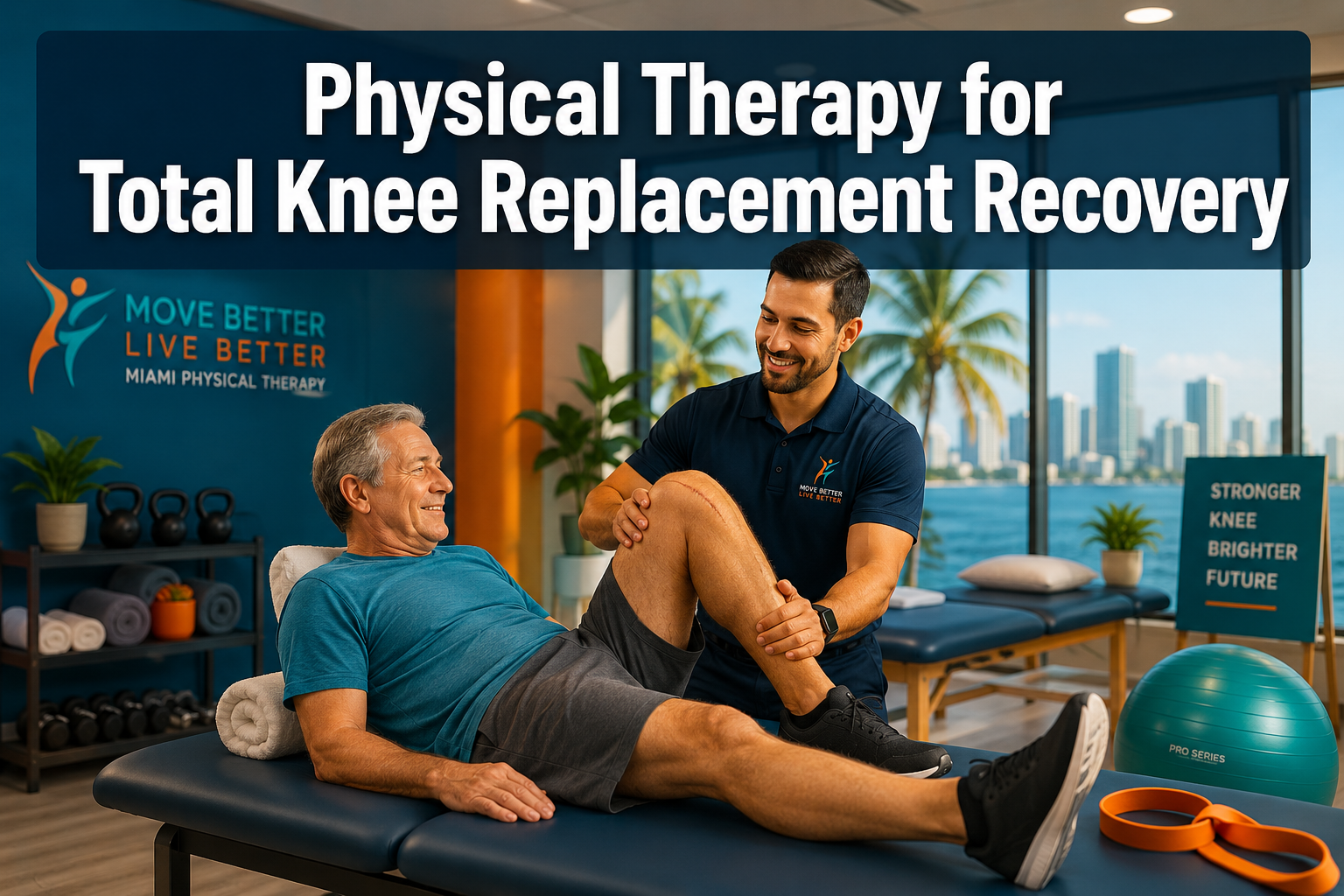
Physical therapy after a total knee replacement focuses on three goals: bending and straightening the new joint, rebuilding the muscles around it, and teaching you to walk safely again. Sessions blend hands-on manual therapy, guided exercise, and gait training, with the intensity stepped up as your knee heals.
A typical clinic visit at All In One Specialty Health includes:
- A quick check of swelling, pain level, and range of motion
- Manual therapy to ease stiffness and improve knee bending (flexion) and straightening (extension)
- Strengthening exercises for the quadriceps, hamstrings, glutes, and calves
- Balance and gait training to restore a normal walking pattern
- Ice, compression, or electrical stimulation to control swelling
- A clear home exercise program you can repeat between sessions
Your licensed physical therapist adjusts each visit based on what your knee is doing that week, not a generic checklist. That is the heart of patient-centered care.
How Long Do I Need Physical Therapy After Knee Replacement
Most patients need 6 to 12 weeks of formal physical therapy, with home exercises continuing for 3 to 6 months. Some patients with stiffer knees, weaker muscles before surgery, or complications may need longer.
Here is a realistic total joint replacement timeline:
| Phase | Timeframe | Main Focus |
|---|---|---|
| Acute | Day 1 to Week 2 | Pain control, basic motion, walking with walker |
| Early recovery | Week 2 to Week 6 | Range of motion, walking longer distances, stairs |
| Strengthening | Week 6 to Week 12 | Muscle rebuilding, balance, return to daily tasks |
| Advanced | Month 3 to Month 6+ | Full strength, light sports, normal activity |
For a deeper look at duration, see our guide on how long PT lasts after knee replacement.
What Exercises Help Recovery From Total Knee Replacement
The best exercises early on are simple, low-load movements that protect the new joint while waking up the muscles around it. Your therapist will progress you from gentle motion to real strength work over several weeks.
Week 1 to Week 2 (gentle):
- Ankle pumps to reduce swelling and blood clot risk
- Quad sets (tighten the thigh muscle while leg is straight)
- Heel slides to bend the knee
- Short arc quads with a rolled towel
- Straight leg raises
Week 3 to Week 6 (building):
- Standing knee bends holding a counter
- Mini squats and sit-to-stand from a chair
- Step-ups on a low step
- Stationary bike with low resistance
- Hamstring curls
Week 6 and beyond (strengthening):
- Resistance band leg work
- Single-leg balance drills
- Walking on uneven surfaces
- Longer bike sessions and pool walking
Quick example: a 68-year-old patient who could only bend her knee to 70 degrees at week 2 reached 115 degrees by week 8 by combining clinic manual therapy with twice-daily heel slides at home. Consistency matters more than intensity. See our post-op exercise guide for safe routines.
How Much Does Knee Replacement Physical Therapy Cost
In Florida, post-surgical knee PT typically costs $75 to $200 per session without insurance, and $20 to $60 in copays with most commercial plans. Medicare Part B covers 80% of approved PT charges after the annual deductible. A full course of rehab can range from $1,500 to $4,000 total, depending on visit count and insurance.
Cost drivers include:
- Number of visits: Most patients attend 12 to 24 sessions
- Insurance type: PPO, HMO, Medicare, workers' comp (our clinic does not accept Medicaid; see plans we accept)
- Deductible status: Whether you have met your annual deductible
- Referral requirements: Some plans need a physician referral first
All In One Specialty Health verifies your benefits before your first visit so there are no surprises. For details, read does insurance cover physical therapy in Florida and our referral guide for Florida patients.
Can I Do Physical Therapy at Home or Do I Need a Clinic
You need both. Clinic visits give you skilled hands-on care, measurement, and progression, while home exercises keep the knee moving between visits. Skipping either side slows recovery.
Choose clinic-based PT if you:
- Are in the first 6 weeks after surgery
- Have stiffness, swelling, or trouble straightening the knee
- Need manual therapy or modalities you cannot do at home
- Want hands-on guidance and accountability
Home exercise programs work best for:
- Daily repetition of motion and strengthening drills
- Patients past week 8 who have hit their motion goals
- Maintenance after formal PT ends
Home health PT is sometimes covered for patients who cannot leave the house safely in the first week or two. Once you can travel, outpatient clinic care usually delivers faster gains. Learn more about a structured home exercise program.
What Are the Best Physical Therapy Techniques for Knee Replacement
Evidence-based recovery combines several techniques rather than relying on any single tool. The most effective approaches include:
- Manual therapy: Hands-on joint and soft tissue work to restore bending and reduce scar tissue
- Progressive resistance exercise: Gradually loading the quadriceps and surrounding muscles
- Neuromuscular re-education: Retraining the brain-muscle connection for smooth, coordinated movement
- Gait training: Practicing a normal walking pattern with or without an assistive device
- Cryotherapy and compression: Controlling swelling so you can move more
- Aquatic therapy: When available, low-impact strengthening in a pool
"The knee that moves heals. Early, guided motion is the single biggest predictor of how well a replacement knee will function a year later."
Our therapists also use orthopedic PT modalities and neuromuscular re-education tailored to each phase.
Is Physical Therapy Painful After Knee Surgery
Some discomfort is expected, but PT should never feel like damage. Most patients describe early sessions as a 4 to 6 out of 10 during movement, dropping back to baseline within an hour. Sharp, stabbing pain or pain that lasts hours afterward is a sign to dial back, not push through.
Normal sensations during PT:
- Tightness or stretching when bending the knee
- Muscle fatigue and mild soreness next day
- Warmth and minor swelling after exercise
Warning signs to tell your therapist or surgeon:
- Increasing redness, heat, or drainage from the incision
- Sudden sharp pain with a pop
- Calf pain, especially with swelling (possible blood clot)
- Fever above 101°F
For a deeper look, read our article on pain during post-surgical PT.
How Quickly Can I Walk Normally After Knee Replacement
Most patients walk with a walker within 24 hours, switch to a cane by 2 to 3 weeks, and walk unassisted by 4 to 6 weeks. A truly normal, smooth gait usually returns between weeks 6 and 12.
Realistic walking milestones:
- Day 1: Stand and take a few steps with a walker
- Week 1 to 2: Walk short distances at home with a walker
- Week 3 to 4: Transition to a cane, walk longer distances
- Week 6: Walk without an assistive device for most patients
- Week 8 to 12: Smooth, even gait with no limp
- Month 4 to 6: Full distance walking, light hiking, return to most activities
Age, pre-surgery fitness, and consistency with home exercises all influence the pace. See our detailed guide on walking normally after knee replacement and driving after knee replacement.
Who Should and Shouldn't Do Aggressive Physical Therapy After Knee Surgery
Aggressive does not mean painful. It means consistent, progressive, and focused. Most patients benefit from steady progression. A small group needs a gentler approach.
Better candidates for faster progression:
- Younger patients (under 65) in good cardiovascular health
- Patients with strong pre-surgery muscle tone
- Those without diabetes or wound healing concerns
- Patients motivated to do daily home exercises
Patients who need a slower, gentler approach:
- Older adults with osteoporosis or balance issues
- Patients with diabetes, heart disease, or healing problems
- Those with revision surgery (second knee replacement)
- Patients with persistent swelling or wound issues
Your physical therapist and surgeon coordinate the right pace. Read about surgeon-PT care coordination.
What Happens if I Skip or Don't Do My Recommended Physical Therapy
Skipping PT after a knee replacement is the most common cause of a permanently stiff knee. Without consistent motion in the first 6 to 8 weeks, scar tissue can form and lock the joint, sometimes requiring a second procedure called manipulation under anesthesia.
What can go wrong without rehab:
- Knee that bends less than 90 degrees (cannot climb stairs normally)
- Knee that will not straighten fully (causes a limp)
- Weak quadriceps that buckle when walking
- Chronic swelling and stiffness
- Higher fall risk
- Lower overall satisfaction with the surgery
For a fuller picture, read what happens if you skip post-surgical PT.
What Are Common Mistakes People Make During Knee Replacement Recovery
The biggest mistake is treating PT as optional once pain improves. Other frequent errors slow recovery or cause setbacks:
- Stopping exercises too early because the knee feels better
- Skipping ice and elevation after exercise, leading to swelling
- Sitting with the knee bent for hours, which limits straightening
- Pushing through sharp pain instead of telling the therapist
- Comparing your progress to someone else's surgery
- Returning to high-impact activity too soon (running, jumping)
- Skipping home exercises between clinic visits
Set a phone reminder for your exercises. Small, daily reps beat occasional long sessions.
How Do Different Ages Impact Knee Replacement Recovery Time
Younger patients usually recover faster, but motivated older adults often do just as well within a few extra weeks.
| Age Range | Typical PT Duration | Notes |
|---|---|---|
| Under 60 | 6 to 8 weeks | Often back to full activity by month 3 |
| 60 to 70 | 8 to 12 weeks | Most common age group, very good outcomes |
| 70 to 80 | 10 to 14 weeks | May need extra strength work |
| 80+ | 12 to 16 weeks | Focus on safe walking and fall prevention |
Age affects pace, not the destination. At All In One Specialty Health, we work with patients of every age group across Miami-Dade County.
Are There Alternative Treatments if Physical Therapy Isn't Working
If progress stalls after 6 to 8 weeks, the answer is rarely to stop PT. It is to adjust the plan or add other tools. Speak with your surgeon and physical therapist together.
Options when standard PT plateaus:
- Manipulation under anesthesia (MUA): A surgeon gently bends the knee while you are sedated to break up scar tissue, followed by intensive PT
- Aquatic therapy: Pool-based exercise reduces joint load
- Pain management referral: Short-term help to allow more movement, see pain management vs physical therapy
- Second opinion on the implant: Rare, but sometimes warranted
- Switching PT clinics: A fresh evaluation can identify missed issues
PT is rarely "not working." More often, it needs a new approach.
Why Choose All In One Specialty Health for Physical Therapy for Total Knee Replacement Recovery
For over 10 years, All In One Specialty Health has helped Miami Gardens, Miami Lakes, and Hialeah patients recover from joint replacement surgery. Our licensed physical therapists offer:
- Bilingual care in English and Spanish
- Same-week appointments for post-op patients
- Personalized treatment plans coordinated with your surgeon
- Evidence-based techniques and modern equipment
- Insurance, Medicare, and workers' comp accepted
Recovery is hard work, but you do not have to do it alone.
FAQ
When should PT start after knee replacement?
Within 24 hours of surgery, usually in the hospital, then outpatient or home-based within the first week.
How often should I do my home exercises?
Most therapists recommend 2 to 3 short sessions per day in the first 6 weeks.
Will I need a walker forever?
No. Most patients use a walker for 1 to 2 weeks, a cane for 2 to 4 weeks, then walk unassisted.
Can I drive during PT?
Most patients return to driving 4 to 6 weeks after surgery, once off narcotic pain medication and able to brake quickly.
Does Medicare cover knee replacement PT?
Yes. Medicare Part B covers 80% of approved outpatient PT after the deductible.
What if my knee still won't bend at 8 weeks?
Tell your therapist and surgeon. Options include increased manual therapy or manipulation under anesthesia.
Can I climb stairs during recovery?
Yes, with guidance. Lead with the strong leg going up and the surgical leg going down ("up with the good, down with the bad").
Is it normal to hear clicking in the new knee?
Yes, light clicking is common and usually harmless. See joint cracking during PT.
Do I need a referral for PT in Florida?
Florida allows direct access for 30 days, but most insurance plans require a physician referral for coverage.
Can I swim after knee replacement?
Usually after the incision is fully healed, around 4 to 6 weeks, with surgeon clearance.
Conclusion and Next Steps
A successful knee replacement is only half surgery. The other half is the rehab work that follows. With early, consistent, evidence-based physical therapy, most patients return to walking, working, and living without the pain that brought them to surgery in the first place.
If you or a family member is preparing for or recovering from a total knee replacement in Miami Gardens, Miami Lakes, or Hialeah, call All In One Specialty Health to schedule a personalized evaluation.
All In One Specialty Health
Phone: (786) 613-7160
Email: pt@allinonecaresolutions.com
Location: Miami Gardens, FL
Hours: Monday, Wednesday and Friday 8:00 AM–5:00 PM; Tuesday and Thursday 8:00 AM–3:00 PM; closed Saturday and Sunday. Same-week appointments often available.
This article is general education and not a substitute for individual medical advice. Always follow your surgeon's specific protocol.
More from the blog
Related reading

Questions about this recovery topic?
Our bilingual physical therapy team in Miami Gardens can help you understand next steps after reading this guide.
This website is for informational purposes only and is not a medical emergency service. If you are in immediate danger or experiencing a mental health crisis, call 911 or 988.
Call for assistance